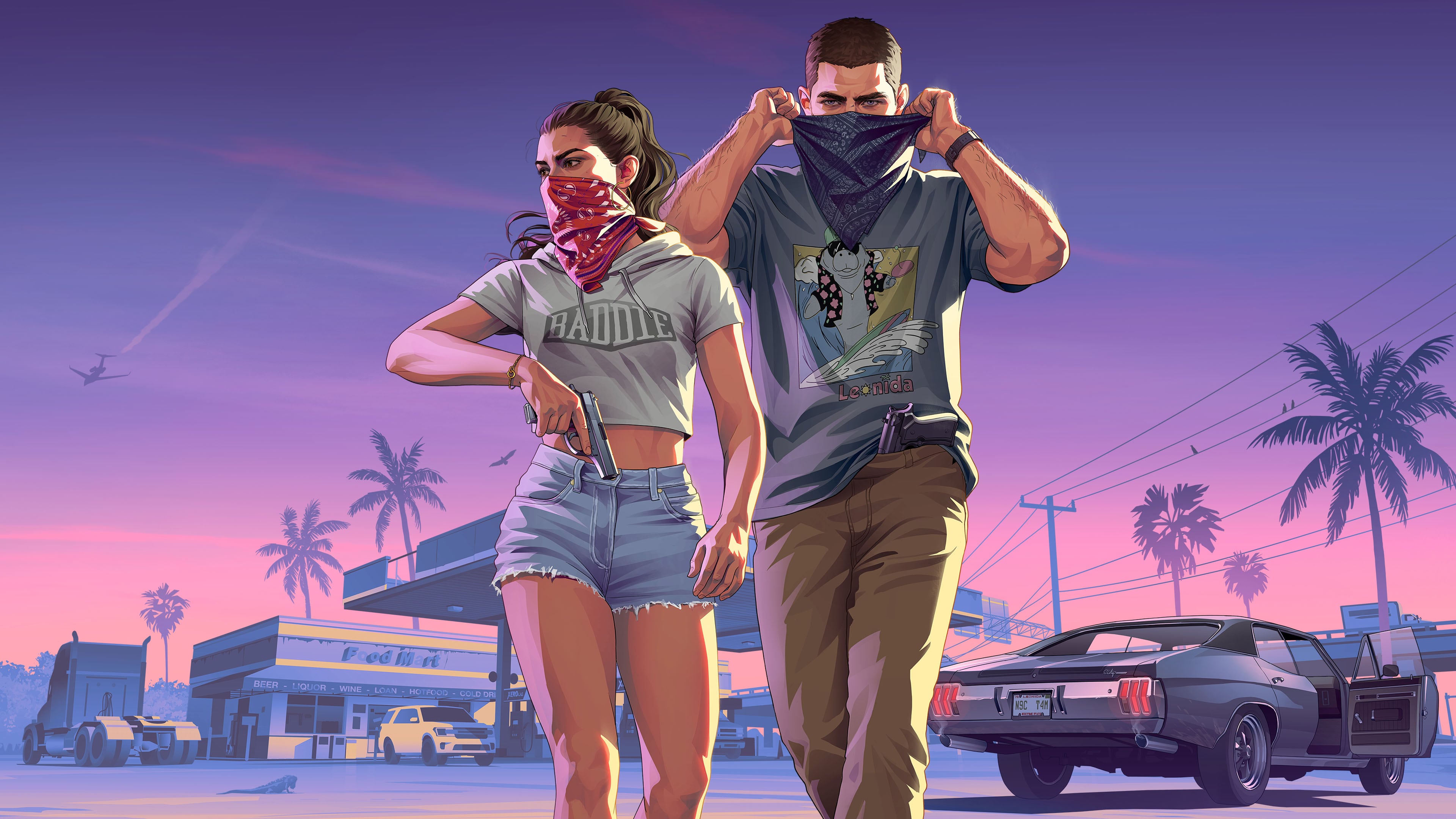
The publisher’s description matters
Rockstar calls Grand Theft Auto VI: An Extended Look a presentation captured entirely from in-game footage on PlayStation 5. That official description gives this video a different evidential status from a conventional cinematic montage. It supports describing the images as in-game footage according to the publisher; it does not mean that every scene is an unedited player recording or that the finished retail build will run identically.
The video is still curated and sequenced. The publisher chose what to show, in what order and for how long. A gameplay clip can demonstrate that an interface or action appears in the footage without explaining every prerequisite, failure state or variation. Our written analysis distinguishes visible sequences from mechanics that still require hands-on testing.
0:00 — A longer viewing changes the questions
The extended runtime gives viewers more context than a short trailer. Instead of reading every cut as a separate promise, the viewer can follow how an opening sequence develops and how the presentation shifts toward driving, encounters and open-world activity. That continuity can make it easier to see interface cues, but it still does not provide the complete mission objective text for every action.
Use the first timestamp as a return point and watch the surrounding sequence. Note which protagonist is visible, what the camera shows and whether the player appears to control the action. Avoid naming a mission unless Rockstar’s page or in-game title establishes it. We will add exact chapter names only when a source supports them.
1:56 — Interface cues are evidence with limits
The extended look includes moments where the viewer can inspect interface elements and prompts. A visible menu or icon can establish that the footage contains that visual element at that time. It cannot alone reveal every input mapping, accessibility option or system rule. A prompt’s wording may also be partially obscured in a moving shot, so a transcription should be checked against the clearest frame.
A real guide will need to test how a prompt responds, what happens if it is ignored and whether the interface differs between protagonists. It should identify platform and build and use repeat attempts. The hints hub can collect those precise answers after release; the mission desk can embed the full sequence in context.
6:05 — Observe actions without inventing systems
As the extended sequence moves through interactions, viewers may see characters respond to the environment and each other. The footage demonstrates those moments in the edit, but one example is not a complete rule. It does not establish whether an action can be repeated, whether it depends on a mission flag or how non-player characters behave in every situation.
The best commentary separates event from system: “the footage shows a character doing this here” is an observation; “the game always allows this” is a broader claim that needs repeated testing. We will use that distinction in any future guide. For now, the official story pages provide character context without pretending to document every interaction.
8:14 — Driving and the surrounding world
A stretch of driving gives the viewer time to notice roads, traffic, signage and the composition around the vehicle. It can support visual commentary about the world’s density and lighting. It is not a controlled benchmark. Camera cuts, route choice, traffic conditions and recording settings all affect what can be inferred about performance or handling.
After launch, a vehicle test should repeat the same route with the same vehicle, camera and conditions where possible. A handling comparison should describe steering, braking and acceleration with a transparent scale or measured data. Rockstar’s footage alone does not provide top-speed figures. Our loadout reference will use only official specifications or clearly labeled tests.
12:32 — A pursuit sequence needs a repeatable test
The extended look includes a sequence with vehicle movement and police attention. It is useful to see the presentation and follow the scene, but the footage cannot establish a universal evasion method. The camera may omit the full route, the pursuit conditions may be scripted and the player's choices are not fully visible in every cut.
A post-launch police guide should test line of sight, pursuit levels, vehicle changes and any map indicators under controlled conditions. It should say when a result happened and how often it repeated. The hints hub will distinguish tested methods from theories, and the map will include a location only after it has been found in the game.
17:03 — Side activities and the open-world promise
Later footage broadens the presentation beyond a single story sequence. Viewers can observe activities, locations and interactions that Rockstar chose to include in the extended film. This supports the modest conclusion that the video presents a range of world content. It does not confirm the complete activity catalogue or whether every pictured event is available to the player at any time.
A directory of side activities should be built from the released game, with requirements, replayability and completion tracking tested one entry at a time. Until then, official region pages can organize art by location, and the walkthrough hub can explain which sections are awaiting release.
20:21 — Read montage structure cautiously
The closing stretch uses rapid images to end on variety and scale. A montage is designed to leave an impression, not to function as a manual. It may include scenes from distinct narrative moments, different in-game conditions or transitions selected for rhythm. A viewer should avoid treating adjacent shots as a single uninterrupted mission.
Use the scrubber to revisit the chosen marker, then watch several seconds before and after it. If a claim depends on the exact order of events, note that the video is edited and do not present the order as story chronology. The official source and visible timestamp make the analysis easier to check.
What the video does and does not confirm
Rockstar’s official page confirms the title, date and its description of the footage as captured entirely in-game on PlayStation 5. The film visibly contains scenes and interface imagery that can be described at their timestamps. Those facts are useful for a technical and narrative preview.
The video does not publish frame-rate targets, resolution modes, a final mission list, every control binding or a complete police simulation guide. Those questions remain for official support material and controlled testing. Follow news for publisher announcements and browse the full video hub for other official uploads.
A useful viewing routine
- Watch the official source uninterrupted before pausing individual frames.
- Keep the timestamp beside an observation and separate it from your interpretation.
- Use the region guide or character dossier for context rather than treating an edit as a mission order.
Field note: Replay at normal speed after inspecting a still. Motion and neighbouring shots often explain what a cropped image hides.
Questions & answers
Does the source play inside this page?
Yes. Play and chapter controls activate the official embedded video on this page. The source citation remains visible below the player.
Does the site force 4K playback?
No. Available resolution depends on the official upload, connection, device, and YouTube’s player controls.
Are the chapter labels official mission chapters?
No. They are editorial viewing checkpoints, not a claimed campaign sequence.
Read our editorial policy for verification and corrections.